Explore:
Inequities in early childhood education and care (ECEC), formal education and youth training.
Test:
Novel solutions to known problems, collaborating with stakeholders.
Create:
Knowledge mobilization tools, including evidence-informed policy.
We draw on multidisciplinary insights from many fields, including economics, applied psychology and human development, and political science. We work with researchers across Canada and abroad to answer questions, develop interventions and mobilize information.
Featured Insight…

Equity in Education Research Digest
In this first issue of our Research Digest, we highlight three different articles and two progress notes, that intersect in the area of education and public policies. For our Research in Progress notes, Mark Ariba describes work he did with Dr. Phil Triadafilopoulos...
Quantitative Analysis and Methods
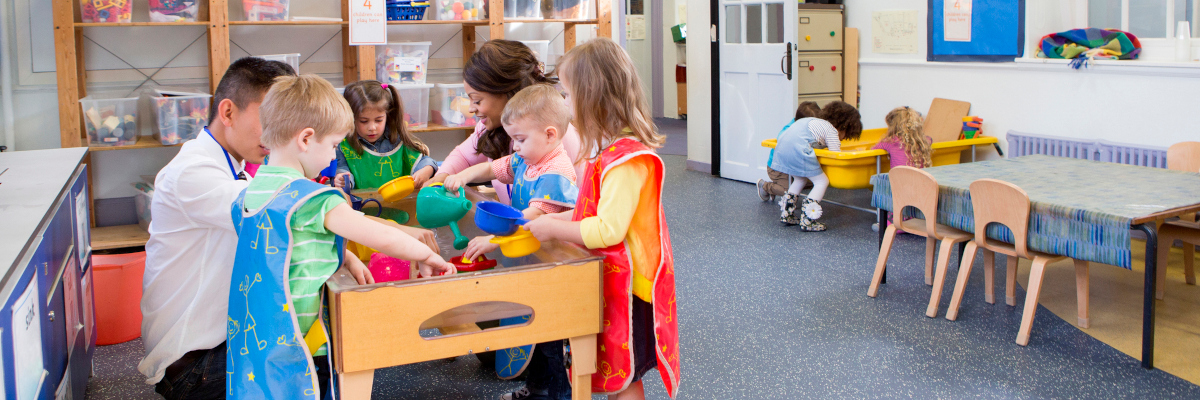
Parental Employment Effects of Switching from Half-Day to Full-Day Kindergarten: Evidence from Ontario’s French Schools
Full-day kindergarten programs are expanding across North America, driven by a policy focus on early childhood development. These programs also affect parents’ budget sets and may lead to changes in labour market outcomes. We examine parents’ labour supply response to...

Better public child care is the engine we need for recovery post-coronavirus
On June 12, 2020, child-care centres in Ontario reopened following a lengthy period of lockdowns. This commentary article urges government action to better support this sector in recovery from the COVID-19 pandemic. Child-care centres are doing their part to support...

Full-Day Kindergarten: Effects on Maternal Labor Supply
We examine the effects of offering full-day kindergarten as a replacement for half-day kindergarten on mothers’ labor supply using the rollout of full-day kindergarten in Ontario, Canada. We find no effect on the extensive margin but found an effect on the intensive...
Intervention Creation and Testing

Assessing Educator Responsivity in Outdoor Early Childhood Education and Care Settings
Outdoor time is essential in early childhood education, yet quality assessments that are specifically focused on outdoor settings remain limited. Existing indoor measures primarily evaluate environment-level quality while neglecting educator-child interactions and the...

Both Me and My Daughter Would Cry Sometimes: Parents’ and Children’s Experiences with Home Education During the Early and Later COVID-19 Pandemic
The COVID-19 pandemic led to unprecedented disruptions to children’s education across the globe, including abrupt transitions from in-person learning to learning from home. The current study investigates patterns of change in the educational challenges that 453...

Defining Peer Collaboration: A scoping review and network analysis
Peer collaboration is a complex skill that emerges in early childhood. However, researchers and practitioners lack a shared understanding/definition of what peer collaboration means and how to observe it in early educational settings. This review aimed to examine...
Designing Effective Policy Responses

Understanding early childhood education and care utilization in Canada
This study examined early childhood education and care (ECEC) utilization in Canada, focusing on use of unlicensed home child care (HCC) from an equity perspective. Data from the 2011 cycle of the General Social Survey (GSS) were used. Across Canada, parent responses reveal that 16.6% of children between the age of 12 months and entry to school were in unlicensed HCC. Another 24% of working parents reported having no regular form of non-parental childcare. Families with higher incomes were more likely to report using center-based care.

Training and Skills Development Policy Options for the Changing World of Work
This article offers a critical assessment of empirical knowledge regarding labour market training and skills development in an era of technological disruption. Although exactly which skills and jobs will become obsolete is not known, technological change may cause unemployment to spike and increase the need for retraining.

The Role of Reflexive Learning in Universal Pre-kindergarten (UPK) Policy Formulation in Canada and the USA
Building on theories of social learning and policy change, this article argues that reflexive learning provides a causal mechanism for how public engagement in policy formulation can trigger policy innovation. Reflexive learning is a mode of learning that takes place during policy formulation and is most likely to occur in policy areas marked by considerable uncertainty and complexity (low problem tractability) and the participation of a wide range of actors (low actor certification).

Mailing Address
Department of Management
University of Toronto Scarborough
UTSC Instructional Centre
1095 Military Trail
Toronto, ON M1C 1A4